Add Row
Add Element
UPDATE
Add Element
  • Home
  • Categories
    • News and Events
    • Trending
    • Home Ideas
    • Health and Wellness
    • Featured Business
    • Fitness
August 29.2025
3 Minutes Read

Trump's Possible National Guard Deployment: Legal Implications for American Cities

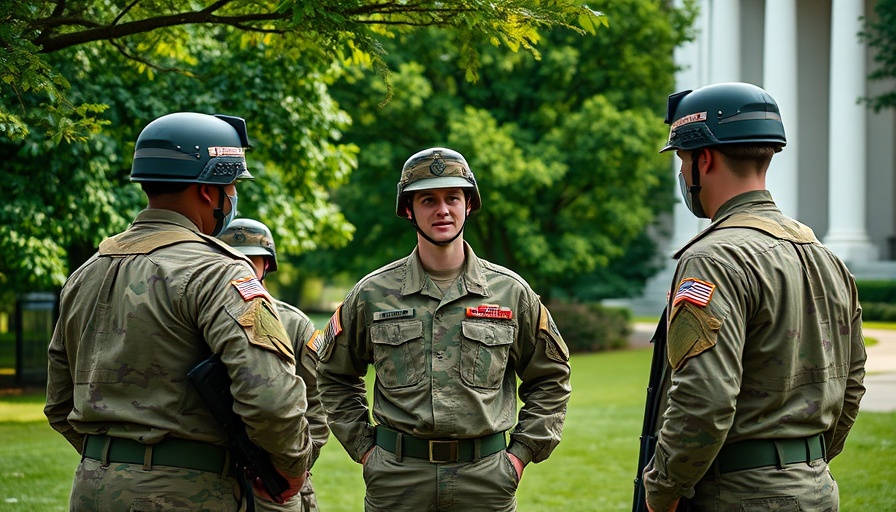
National Guard soldiers stand vigilantly near a government building.

The Potential for Increased Federal Troop Deployment

As President Trump openly entertains the idea of deploying National Guard troops to combat crime in major cities, such as Chicago and Baltimore, it’s essential to understand the legal implications of such actions. This notion raises alarms reminiscent of historical tensions between federal authority and local governance, igniting debates around the Posse Comitatus Act. This law prohibits the use of federal military personnel to enforce domestic policies, yet exceptions can be made under specific circumstances, creating a gray area amidst political maneuvering.

Understanding the Use of the National Guard

Trump's recent deployment of troops followed his contentious engagement with Governor Gavin Newsom of California, where he asserted federal jurisdiction over the National Guard to protect federal properties amid protests. This event sparked a lawsuit questioning the president's authority, shedding light on how state governors might play a crucial role in the process. When considering deployments in Democratic-led cities, the political landscape complicates matters—the push for intervention may not resonate with local authorities, necessitating their consent for action.

How History Influences Current Contexts

Reflecting on the civil rights era, when federal troops often confronted protests against segregation, the potential for conflict and civil unrest looms large. Following historical patterns, the presence of military personnel in civilian affairs can lead to escalated tensions, raising concerns over civil liberties. Legal experts caution that Trump’s strategies might not only breach legal norms but also provoke significant civil backlash.

Current Climate of Crime and Intervention

Amid a reported decline in violent crime rates in major urban centers, Trump's justification for military deployment seems tenuous. Critics argue that invoking federal force undermines local unity and escalates existing conflict instead of providing tangible solutions. By examining crime statistics, one can assess the actual need for federal intervention versus political posturing that might serve electoral motivations more than public safety.

Legal Precedents: What the Law Allows

The nuances of federal and state law play a pivotal role in this discussion. The use of Title 10 to activate the National Guard typically requires permission from state governors, although the unique status of the D.C. National Guard allows for more significant latitude in deployment. How effective interventions can be managed legally poses intricate questions that will see conflict in courts should the president move forward without state collaboration.

Looking Forward: The Future of Federal Intervention

As Trump’s administration seems poised to press on with its plans, one can forecast a landscape fraught with legal battles and protests. Should the president proceed with sending troops into cities without the backing of local governors, it may ignite further national debate about the balance of power between federal and state authorities. Engaging communities through dialogue instead of military presence might yield more fruitful outcomes and address the root concerns about crime and civil rights.

Community Response: A Call for Public Engagement

Bakersfield residents—and indeed all American citizens—must remain vigilant. Engaging with local leaders and participating in community dialogues about safety and federal intervention can empower citizens to impact decisions made at the national level. Advocacy for balanced approaches toward public safety, rooted in community participation and respect for civil rights, is crucial for fostering safe and cohesive neighborhoods.

As President Trump continues to explore federal intervention in American cities, it is vital for community members to remain informed and engaged. By voicing concerns and participating in discussions surrounding public safety and civil rights, residents can influence the direction of policy and hold leadership accountable. Understanding the complexities at play is key to ensuring a future where citizen rights and public safety coexist harmoniously.

News and Events

Write A Comment

*
*
Related Posts All Posts
02.24.2026

Sacramento State's Football Ambitions and Economic Uncertainty: A Look at FBS Move

Update Elevating Sacramento State: A Bold Move to FBS For months, Sacramento State has been on a mission to elevate its football program by joining the Football Bowl Subdivision (FBS) as part of the Mid-American Conference (MAC). With a hefty financial commitment in excess of $25 million for the entry fees and necessary stadium upgrades, the Hornets’ leap is seen as a crucial branding tactic. University President Luke Wood stated that the move not only places Sac State on a larger map but also aims to attract more out-of-state students, boosting overall enrollment. Questionable Financial Projections However, the enthusiasm has been clouded by questions surrounding the validity of the projected economic impact. The university announced a staggering $975 million economic benefit over five years, yet experts in sports economics argue that this figure relies on outdated metrics. A prominent method cited is the Advertising Value Equivalency (AVE), which many industry professionals have deemed inadequate for accurately reflecting true economic value. Prominent economist Victor Matheson emphasizes the critical distinction between mere media exposure and actual financial gains: “If someone sees Sacramento State on TV, that’s exposure. But if they then buy a ticket or enroll, that's economic impact,” he noted. Critics point out that the connection between televised appearances and real-world economic benefits is often overstated. Insights from Industry Experts Industry voices are skeptical about the primary study commissioned by Sacramento State, which produced such lofty figures. Richard Johnson from CBS Sports revealed that the CEO of Collegiate Consulting, the firm hired for the study, expressed confusion over how the $675 million broadcast valuation was fabricated, stating, “I 100% question that.” Focusing only on quarterly and annual returns could inflate expectations significantly without providing tangible results. Meanwhile, Sal Della Monica, an executive in the marketing world, pointed to a shift in evaluating publicity that renders the AVE metric obsolete. He argues that schools must adopt more advanced techniques for transparency in their financial estimations. Examining the Costs vs. the Benefits Sacramento State’s ambitious move comes amidst high operational costs, including a $5 million entry fee to the NCAA and covering travel for visiting MAC teams, which will cost an additional $2-4 million over the span of five years. Interestingly, most of the funding required for this undertaking is projected to originate from the football program's revenues through revenue-sharing agreements and private donations. Further complicating the scenario, the MAC typically distributes its own funds to members to supplement expenses. Sac State, however, has opted to forgo these distributions for its first five years in FBS, placing considerable risk on the Hornets as they step into a new league level. Local Economic Impact: The Missing Link As the complexities of this transition unfold, the community remains skeptical regarding the actual benefits for Sacramento residents. The school’s projected economic impact notably lacks an analysis of how much local businesses or residents might gain. Wright points out the necessity of tracking real-time responses from the community: “What does it mean if we're on TV? We need to see actionable outcomes to validate these projections,” he noted. Moving forward, Sacramento State must confront the challenge of converting its FBS presence into genuine financial involvement from the local community while maintaining the structural integrity of its program. The novelty of FBS participation could wear off quickly if the team's performance doesn't align with high expectations. Future Projections: A Look Ahead Looking to the future, the success of Sacramento State in the MAC hinges on the team’s competitive performance and ability to attract a loyal fanbase. As the Hornets prepare for challenging matchups, including potential conflicts with established FBS programs, their strategic execution will be under a lens. Stakeholders are hopeful but wary, understanding that the immediate financial impact may take time to materialize. For students, alumni, and local fans, it is crucial to recognize both the opportunities and challenges presented by this leap towards FBS. While the allure of national exposure and the prestige of playing in a higher division is captivating, the ultimate goal should be to foster lasting benefits that resonate throughout the Sacramento community. In conclusion, Sacramento State's ambitious move to the FBS is a case study in modern collegiate athletics. Should the school realize its projections, it will not only elevate its brand but also enhance the community it represents. As local residents, it is essential to remain attentive to how this transition unfolds and what tangible benefits it may yield—both in financial outcomes and community engagement.

02.24.2026

Louvre Director Resigns Amid Crown Jewels Heist: What It Means For Security

Update Louvre Director’s Resignation: A Response to Scandal The recent resignation of Laurence des Cars, director of the Louvre Museum, follows a shocking jewel heist that has captivated global attention. In a statement from French President Emmanuel Macron, des Cars’ decision to resign was termed an “act of responsibility,” warranted due to the ongoing outcry surrounding the October incident when thieves made off with €88 million worth of crown jewels in under eight minutes. This brazen daylight heist not only embarrassed museum officials but has raised critical questions about security at one of the world's most famous landmarks. The Context of the Heist: A Million-Euro Question The incident that led to this drastic leadership change occurred on a seemingly typical weekend in Paris. With nearly 10 million visitors yearly, the Louvre operates as a monument of cultural heritage; however, it is clear that such high foot traffic necessitates stringent security measures. This theft was more than just an isolated event; it indicated a glaring vulnerability, especially in a metropolis known for its art and history. Why This Matters to the Bakersfield Community Though Bakersfield, California, may seem worlds away, the implications of such events ripple across the globe. Museums and galleries everywhere face increasing scrutiny over their security practices, and art theft has become a universal concern. Local cultural institutions in Bakersfield could inadvertently suffer if a similar incident were to occur, with people questioning the safety of attending art events or exhibitions. Future Predictions: What Lies Ahead for the Louvre? With des Cars stepping down, major questions linger regarding the future direction of the Louvre. Security upgrades, modernization, and rejuvenation projects are on the horizon, as outlined by President Macron. Observers speculate that the museum may consider technological advancements like facial recognition and advanced surveillance systems to safeguard against future threats. These potential changes offer an exciting perspective on how enduring institutions may evolve in response to crises. Counterarguments: Is Resignation the Solution? Critics may argue that des Cars’ resignation is a hasty solution to a multifaceted problem. While accountability is crucial, questioning whether changing leadership can effectively eradicate systemic security issues is valid. Many wonder if the Louvre had implemented appropriate measures prior to the heist, and if not, what might be done to prevent a recurrence under new management. This conversation is vital for other institutions to consider, particularly as cultural thefts rise worldwide. The Call for Increased Security in Cultural Institutions This incident has sparked a broader dialogue around the necessity for cultural institutions to enhance their security protocols. Advocacy for heightened scrutiny and review of existing systems is growing, as many urge for an assessment of how art and artifacts are protected in public spaces. Local vs. Global Perspectives on Museum Security The Louvre signifies more than just a physical space; it represents a collective cultural identity. For communities everywhere, including Bakersfield, heightened awareness surrounding the safety of cultural assets is a topic deserving of attention. Share your thoughts on how local institutions can prioritize security while enriching public engagement with the arts. Conclusion: Engage with Our Community As discussions evolve around cultural security, it is essential to stay informed and engaged within our communities. Participate in local forums or museum events to voice your perspective as we collectively navigate these vital topics in our society. Join the conversation and advocate for a robust cultural infrastructure.

02.24.2026

Savannah Guthrie's Family Offers $1 Million to Find Missing Mother

Update A Million Reasons to Care: Savannah Guthrie's Call for Help Tucson, Arizona, has become the epicenter of a desperate search as Savannah Guthrie, co-anchor of the “TODAY” show, announced that her family is offering a $1 million reward for any information leading to the recovery of her mother, Nancy Guthrie, who has been missing since February 1. An emotional plea shared through social media highlights the magnitude of worry and hope that envelops the Guthrie family in this harrowing time. Understanding the Disappearance Nancy Guthrie, aged 84, was last seen during a family dinner the night before her disappearance and was expected at a friend’s home to participate in a livestreamed church service the day she went missing. The Pima County Sheriff's Office has deemed her disappearance suspicious, suggesting she may have been taken against her will. According to Sheriff Chris Nanos, the focus is on discovering her whereabouts, not on assigning blame to her family, as they have all been cleared as suspects. A Personal Appeal: The Heart Behind the Reward In a poignant video, Savannah Guthrie urged the public to keep her mother in their thoughts and prayers, emphasizing their unwavering hope for a miracle. This emotional appeal reflects a broader community sentiment that such tragedies touch many families. Their offer of $1 million is not just a monetary incentive; it’s a beacon of hope for other families facing similar uncertainties. "We know there are millions of families that have suffered with this kind of uncertainty," Savannah explained, revealing plans to donate $500,000 to the National Center for Missing and Exploited Children. This generosity underlines their commitment to raise awareness and aid families enduring the same plight. The Community Response: A Unified Front In the wake of Nancy's disappearance, Tucson residents have rallied to show their support. Makeshift memorials adorned with flowers and heartfelt messages have sprung up outside the Guthrie home, showcasing the profound impact of this case on the local community. The emotional connection felt by neighbors is deepened by the vulnerability displayed by the Guthries during this challenging time. Security Footage Fuels Investigation Amidst ongoing investigations, the FBI has released footage of a masked individual spotted near the Guthrie residence, prompting speculation about their involvement in Nancy's disappearance. Law enforcement remains vigilant, urging anyone with information to come forward. They are offering a $100,000 reward themselves, alongside contributions from Tucson Crime Stoppers. This multi-faceted approach highlights how essential community involvement is in resolving such cases. Wider Implications and Emotional Toll The situation surrounding Nancy Guthrie exemplifies a broader societal issue regarding missing individuals, particularly elderly ones who may be vulnerable. It emphasizes the emotional toll experienced by families and communities when a loved one goes missing. The anxiety, fear, and hope displayed by the Guthrie family resonate with many, serving as a stark reminder of the fragility of life. Taking Action: What You Can Do As the search continues for Nancy Guthrie, community members in and around Bakersfield, CA, can lend their voices and share information that could help in her recovery. Staying informed and involved in local missing persons initiatives is a way to offer support beyond this singular tragedy. Furthermore, sharing the Guthrie family’s story could help keep hope alive and pressure for continued media coverage. Final Thoughts: Hope and Community Matters This heartbreaking narrative continues to unfold and highlights a crucial call for awareness and community cooperation in addressing missing persons cases. To participate actively, whether through sharing information or amplifying the voices of those affected by similar situations, can make a significant difference. Together, communities have the power to impact change and give hope to those in despair. As we strive for answers in Nancy's case, let us remember the importance of compassion and support for affected families. If you have any information related to Nancy Guthrie’s disappearance, please contact the FBI tip line at 1-800-CALL-FBI — every small detail could lead to a breakthrough in this case, potentially reuniting a family torn apart by uncertainty.

Terms of Service

Privacy Policy

Core Modal Title

Sorry, no results found

You Might Find These Articles Interesting

T
Please Check Your Email
We Will Be Following Up Shortly
*
*
*