Add Row
Add Element
UPDATE
Add Element
  • Home
  • Categories
    • News and Events
    • Trending
    • Home Ideas
    • Health and Wellness
    • Featured Business
    • Fitness
October 17.2025
3 Minutes Read

Santa Monica Assault Leads to Hours-Long Barricade: What It Means for the Community

Assault suspect arrested after barricading for hours in Santa Monica

A Night of Tension and Uncertainty

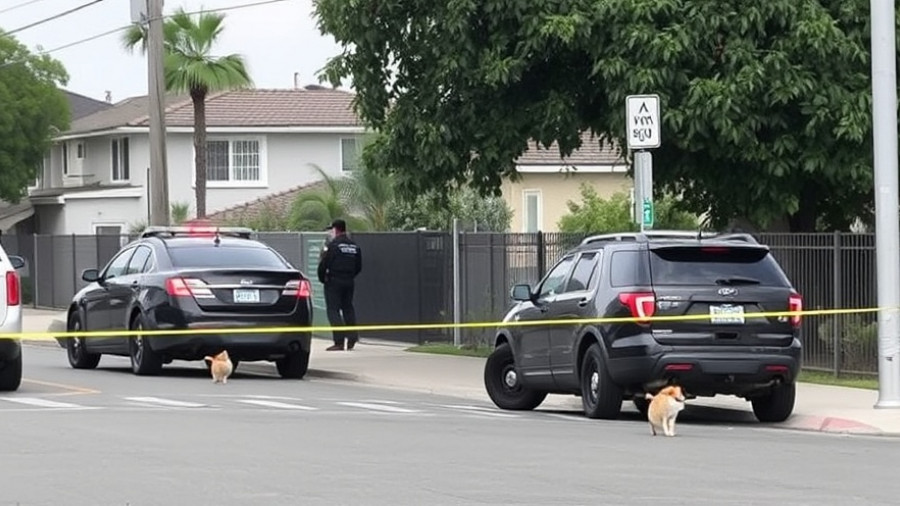
In the heart of Santa Monica, a dramatic confrontation unfolded late Friday night as police responded to an assault that left a community on edge. The incident occurred in the 1400 block of Michigan Avenue, where a man barricaded himself following allegedly attacking someone inside an apartment complex. This incident echoes the worries many residents feel regarding safety and crime in their neighborhoods.

Community Calm After Chaos

Santa Monica police swiftly responded, evacuating nearby apartments to prioritize the safety of residents. As officers arrived on the scene, they found themselves engaged in a tense standoff that lasted for hours. The use of crisis negotiators and a specialized SWAT team reinforced the authorities' commitment to resolving the situation without further escalation or harm.

The Broader Impact of Assaults on Neighborhoods

Incidents like this can cause ripple effects within a community. A recent similar case in Santa Monica involved a man barricading himself after attacking family members, raising serious concerns about domestic violence and public safety. These events shine a light on the impact of violence on community cohesion and the need for preventive measures to enhance safety across neighborhoods.

Lessons from Santa Monica’s History of Standoffs

The Santa Monica police have faced multiple situations involving barricaded suspects, including notable cases in the past few years. Each experience informs their approach and preparedness for such potential threats. The tension from these events often stirs community conversations about safety and how residents can contribute to a supportive and interconnected neighborhood.

Emergency Protocols: A Community Connector

During standoffs, emergency protocols require extensive coordination between local police, neighboring counties, and community organizations. Activities like evacuations and the presence of specialized teams like Crisis Negotiation Units not only handle immediate threats but also reassure residents and remind them of the well-oiled systems in place to protect them. These measures play a crucial role in community trust and resilience.

Understanding Emotional Responses

As a member of the community in and around Bakersfield, experiencing an event like this can evoke a range of emotions – from fear to anger to a desire for action. It's vital for residents to engage in discussions about these feelings and share insightful perspectives on how to ensure communal safety.

Local Initiatives to Foster Community Resilience

Whether through neighborhood watch programs, community meetings, or collaborative safety initiatives, residents can take proactive steps to mitigate risks. Engaging with local authorities and forming strong community ties can lead to a more robust response when crises arise. It’s not just about managing risks; it's about creating an environment where all residents feel valued and connected.

A Call to Collaborate for Safety

In light of this recent barricade incident, local community organizations in Santa Monica and surrounding areas encourage residents to have proactive discussions with their neighbors. Creating dialogues on safety, violence prevention, and support networks can significantly strengthen community bonds. Residents are invited to reach out to local leaders and join community safety meetings to play a part in shaping a safer environment for everyone.

Join initiatives aimed at promoting community safety, and take part in collaborative discussions that bring neighbors together in support of enhancing overall well-being and safety. Stay informed about local events and how you can be part of positive change in the neighborhood.

Trending

Write A Comment

*
*
Related Posts All Posts
11.13.2025

Bob Ross’ Charitable Auction: Beyond Happy Little Trees to Support Public Broadcasts

Update A Celebration of Bob Ross’ Legacy through Art Have you ever watched Bob Ross paint on "The Joy of Painting"? Known for his charming personality and calming voice, Ross became a beloved figure on public television. Recently, his artwork garnered incredible attention as three of his paintings were auctioned off for over $600,000, with proceeds aimed at supporting American public broadcasting—an effort particularly crucial after significant cuts to government funding. Why Public Broadcasting Needs Our Support In 2025, the Corporation for Public Broadcasting faced a staggering loss of over $1 billion in federal funding due to budget cuts made by the Trump administration. This dramatic decrease has left many public television stations struggling to maintain their operations. In response, Bob Ross Inc. initiated a charity auction, presenting 30 of Ross's paintings to help fill this massive funding gap. During an engaging auction held in Los Angeles, hundreds of bidders participated, showing not only their appreciation for Ross’s art but also their commitment to keeping public broadcasting alive. This event was not just a sale; it was a celebration of community and the arts. Ross’ Paintings: More than Just Art The paintings auctioned were no ordinary pieces but represented Ross’s unique talent, capturing the beauty of nature with vibrant landscapes like "Cliffside," "Home in the Valley," and "Winter's Peace." These works are more than paintings; they embody the philosophy that Ross often shared: that anyone can create art. He believed in encouraging viewers to express themselves and embrace their creativity. “Anyone can paint,” Ross famously stated, and this message resonated with audiences back in the 80s and continues to do so today. His teaching style, characterized by simplicity and encouragement, made art accessible to individuals who might have otherwise never picked up a paintbrush. The Bidding War: A Dramatic Turn of Events As the auction commenced, excitement filled the room. The paintings that once had estimated values far below their selling prices surged as bidders competed passionately. "Cliffside," painted in 1990, became a highlight, thanks to its rich narrative and stunning visual appeal. The reverberating applause after each sale underscored the community spirit—every bid placed was a nod to Ross’s enduring legacy and a commitment to the arts. Connecting the Past with Present Causes This event is more than just about buying art; it reflects a larger need to support public broadcasting, which plays a crucial role in our communities. Shows like "The Joy of Painting" and other educational programs rely heavily on viewer donations and corporate partnerships, especially in light of recent funding cuts. Through the auction, many hope to encourage others to give back to the programming that nurtured countless dreams and aspirations. Moreover, as Ross would have wanted, it provides a platform for people to gather, engage, and discuss the importance of art and education in society. This is especially relevant in areas like Bakersfield, where community ties and local initiatives greatly enhance public welfare. A Future Worth Painting Ultimately, the sale of Ross' works reminds us of an essential truth: that art and culture are vital to our communities. Every painting sold contributes to the ongoing legacy of public programming and serves as a call to action for art enthusiasts and citizens alike. Ross’ ability to inspire creativity and connection may be cherished for generations to come, making it imperative for us to support the public media that keeps these messages alive. Join the Movement! As we reflect on the auction and its implications, your support for public broadcasting can make a significant difference. Whether through donations or simply being an informed viewer, take action today and help ensure that the joy of art and education continues to flourish in our communities.

11.13.2025

AnaptysBio's Strategic Split: Future of Biopharma and Royalty Management

Update Transforming AnaptysBio: A Strategic Split for Growth Biotechnology is a field characterized by rapid advancements and ever-changing landscapes, and companies must adapt to survive. AnaptysBio, Inc. (Nasdaq: ANAB), a clinical-stage biotechnology firm based out of San Diego, is set to undergo a significant transformation. As it approaches its 20th anniversary, AnaptysBio has announced plans to split into two separate companies, aiming to improve its operational focus and attract investment in a more strategic manner. A New Direction in Royalty Management The formation of two independent entities—Royalty Management Co and Biopharma Co—will allow investors to choose which segment they wish to support. This division arises as AnaptysBio experiences an influx of royalty payments from Jemperli, a cancer treatment developed in collaboration with GSK. The anticipated increase in revenue from Jemperli, which is projected to reach $1.3 billion in sales this year, underscores the significance of financial flexibility in the biotech sector. Insights Into the Royalties Landscape As royalty payments increase, the strategic split aims to prevent dilution of company value while still enabling access to capital necessary for future drug trials. Following the company’s licensing agreement with GSK, AnaptysBio expects a one-time commercial milestone payment once sales surpass $1 billion. This financial windfall is likely to bolster both newly formed companies, enhancing their ability to pursue innovation in the biotech space. The Science Behind AnaptysBio's Innovations Founded with a mission to develop antibody-based therapies, AnaptysBio focuses on treating autoimmune diseases such as rheumatoid arthritis and celiac disease. The anticipated royalties from Jemperli are a testament to Anaptys' successful research and development initiatives. By focusing on immunotherapies, the company is not merely entering a high-revenue arena but also contributing to improving patient outcomes—a crucial factor in the field of health tech. Investors’ Perspective: What It Means for Opportunities The separation into Royalty Management Co and Biopharma Co aligns with broader trends within biopharma investing, where investors increasingly seek clarity in their investments. This split not only gives investors a clear picture of revenue streams but also allows them to support specific aspects of AnaptysBio’s innovation pipeline. Such strategic business maneuvers heighten market opportunities and can lead to greater financial returns in time. Challenges Ahead for AnaptysBio's Future Despite the promising prospects, AnaptysBio must navigate potential challenges in the vast biotech landscape. The company faces competition from numerous firms creating similar therapies, and it must work diligently to maintain a competitive edge. Furthermore, investors will be closely monitoring how effectively the two separate entities can operate independently. In Conclusion: A Compelling Future for AnaptysBio With its upcoming split, AnaptysBio is poised to tackle the challenges of the biotech industry while harnessing the opportunities presented by its clinical successes. Investors and patients alike will be watching closely as these changes unfold. The creation of two businesses will not only enhance operational focus but is also likely to promote innovation and drive sustainable growth. As exciting developments continue to emerge within AnaptysBio, stakeholders should stay informed and consider how they might engage with the evolving narrative within this thriving biotechnology community.

11.12.2025

The Colorado River Crisis: Urgent Needs and the Push for Solutions

Update Colorado River: A Lifeline at Risk The Colorado River, an essential lifeline for over 35 million people spanning several states, stands at a crossroads. As negotiations continue among seven Western states over its dwindling waters, the urgency escalates. These negotiations aim to manage the river's chronic water shortages, a critical issue as the river has been overused and mismanaged, forcing it to seldom meet the sea. This historic river, vital for agriculture, urban centers, and Native American tribes, is now fighting for survival amidst prolonged drought due to climate change. The Impact of Climate Change on Water Resources With droughts impacting the region for over two decades, experts estimate that the Colorado River's flow has decreased by approximately 20%. Reservoirs like Lake Mead and Lake Powell, which are the largest along the river, are fighting their own battles, currently hovering at just over 30% of their capacity. Climate change, largely driven by fossil fuel emissions, is intensifying these dry conditions, leaving millions in limbo as farmers and cities brace for a future with less water. Political Tensions and Unresolved Disagreements The negotiations have seen persistent disagreements, particularly between the three lower-basin states of California, Nevada, and Arizona versus the four upper-basin states of Colorado, Utah, Wyoming, and New Mexico. California, Arizona, and Nevada have made significant proposals aimed at cutting water consumption, while their upstream counterparts are hesitating, clinging to outdated legal rights. Rep. Greg Stanton highlighted that a viable plan must involve equitable contributions from every state, emphasizing that sustainability is a shared responsibility, not one to be narrowly defined by historical allocations. Consequences of Inaction: A Stark Warning If these negotiations continue to stall, the consequences could be dire. The upper states' reluctance to decisively act risks exacerbating water shortages and provoking conflicts that may escalate to legal battles. Important voices like Sen. John Hickenlooper stress that cooperation is key to navigating this water crisis, warning against the futility of litigation. Community Perspectives: How This Affects Local Residents For residents in cities like Bakersfield, the implications are personal. A large number of families rely on the Colorado River for water supply; thus, the outcome of these negotiations directly impacts their livelihood, quality of life, and even community stability. Lower-than-average water levels can lead to higher costs, diminished agricultural yields, and long-term changes to local ecosystems, all of which can shake the foundations upon which communities—ranging from farmers to urban dwellers—rely. Act Now: The Role of Citizens in Water Conservation As negotiations unfold, it's also important for individuals in Bakersfield and the surrounding area to play their part. Community-wide initiatives focused on water conservation, sustainable landscaping, and informed water usage can contribute to the broader movement towards restoration and preservation of precious resources. Engaging in local governance, educating others on water issues, and advocating for sustainable practices are actions every resident can take to support their community’s stance during these crucial times. Final Thoughts: A Call for Unity and Action The future of the Colorado River is uncertain, and the responsibility lies with both our leaders and us as community members. As negotiations continue, the time for consensus and proactive efforts to preserve our water resources is now. We must advocate for a sustainable approach to managing the Colorado River, ensuring it remains a vital resource for generations to come. Join the conversation and take action today by starting community initiatives to promote sustainable living and conserve water. Your efforts can directly impact local and wider water strategies.

Terms of Service

Privacy Policy

Core Modal Title

Sorry, no results found

You Might Find These Articles Interesting

T
Please Check Your Email
We Will Be Following Up Shortly
*
*
*